
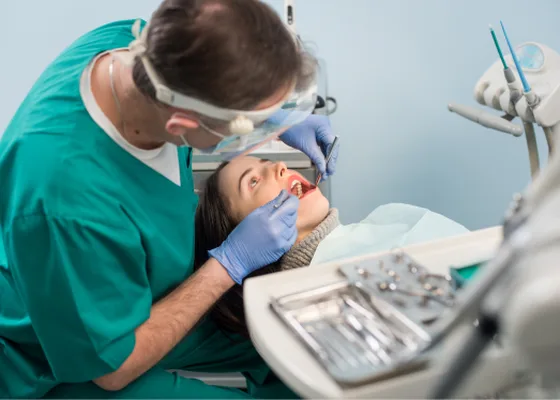
During dental implant surgery, local anesthesia is used to keep the area numb, and sedation is available when appropriate. Most patients report mild soreness for a few days that is manageable with recommended care.
Expert Implant Care
Dr. Firas F. Katabi is a board-certified oral and maxillofacial surgeon specializing in dental implant placement and full-arch reconstruction. With advanced 3D imaging and computer-guided surgery, every implant is planned with precision for long-term success.
Whether you need a single implant or a complete smile restoration with All-on-X®, our Chicago practice provides personalized treatment plans with sedation options for your comfort.
Oral & Maxillofacial SurgeryImplant ReconstructionAll-on-X CertifiedIV Sedation
What Are Dental Implants?
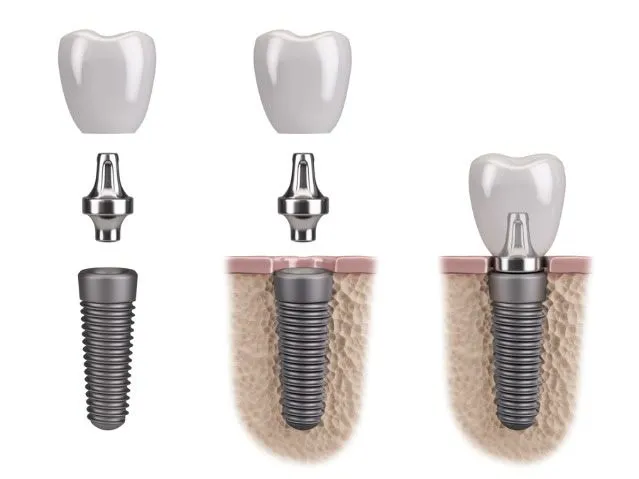
Dental implants are small, biocompatible Titanium/Zirconium alloy implants placed in the jaw to replace missing teeth from root to crown. Once the implant integrates with the bone through a process called osseointegration, a connector (abutment) and a custom restoration complete your smile.
This modern approach restores function and appearance with stability that does not rely on adjacent teeth. Chicago dental implants can be used to replace a single tooth, several teeth with an implant bridge, or an entire arch with All-on-X treatment supported by multiple implants.
When Are Dental Implants Recommended?
Dental implants are recommended to replace missing teeth when you want a stable, long-term solution that looks and feels natural. Our oral surgeon may recommend implants when:
- You have one missing tooth and want to avoid a traditional bridge
- You are missing several teeth and want strong support for a multi-unit restoration
- You need to replace a full arch and want a fixed option like All-on-X
- Your denture is loose and you want better stability with implant support
- You plan an extraction and prefer immediate or staged dental implant placement for quicker restoration
Because bone health matters, some patients benefit from bone grafting or reconstruction before implant placement. Dr. Katabi evaluates your goals and oral health to determine the best way to replace missing teeth. Sedation is available to make the experience more comfortable during dental implant surgery.
The Dental Implant Process
1. Consultation and Planning
Your journey begins with a thorough evaluation including 3D cone beam imaging. Dr. Katabi assesses bone density, tooth position and overall health to create a detailed surgical plan using computer-guided implant technology.
2. Implant Placement
Implant placement is performed with local anesthesia and sedation as needed. The implant is precisely positioned in the jawbone based on the pre-surgical plan for optimal stability and restoration alignment.
3. Healing and Integration
Over the following months, the implant integrates with the bone through osseointegration. During this time, a temporary restoration may be placed depending on your treatment plan.
4. Final Restoration
Over three to six months, the implant integrates with bone. Once stable, your restorative dentist places the final crown, bridge, or denture on the abutment.
Types of Dental Implants We Offer
- Single-tooth implants with individual crowns
- Implant-supported bridges for multiple missing teeth
- All-on-X® full-arch restoration for complete tooth replacement
- Implant-retained dentures for improved denture stability
- Zygomatic implants for patients with significant bone loss
Why Choose Dental Implants?
Long-Lasting Solution
Dental implants are designed to last for decades with proper care, providing permanent tooth replacement.
Preserve Jawbone
Implants stimulate bone like natural tooth roots, preventing the bone loss that occurs with missing teeth.
Restore Full Function
Eat, speak and smile with confidence—implants function like your natural teeth.
Protect Healthy Teeth
No reshaping of adjacent teeth required, unlike traditional bridge work.
Single or Full-Arch
From one missing tooth to full-arch All-on-X restoration, implants adapt to your needs.
Natural Appearance
Custom restorations are designed to match your natural teeth in shape, size and color.
Ready to Replace Missing Teeth?
Schedule your dental implant consultation with Dr. Katabi in Chicago, IL. We'll evaluate your needs, explain your options, and create a personalized plan for a confident, lasting smile.
773-486-2220Frequently Asked Questions
For many patients, the process takes several months from placement to final restoration, allowing the implant to integrate with the bone. Full-arch cases can streamline treatment timelines with carefully planned sequencing.
Yes, many patients are still candidates. If bone has thinned, bone grafting or reconstruction may be recommended to prepare the site for secure dental implant placement in Chicago.
Brush and floss daily and keep up with routine professional care. Implants do not decay, but healthy gums and regular maintenance help protect long-term results.
A single implant replaces one tooth with an individual crown. All-on-X uses multiple implants to support a full-arch restoration, providing a fixed solution for extensive tooth replacement.
Yes. Dental implants are widely used and made from biocompatible materials. Careful planning, sterile technique, and follow-up support safe, predictable outcomes.
With good home care and regular dental visits, implants can last decades. Crowns may need replacement over time due to normal wear.
Smoking increases the risks of delayed healing and implant failure. Quitting or reducing smoking before and after surgery improves success rates.
Mild swelling, bruising, or tenderness may occur for a few days. Soft foods, careful hygiene, and follow-up visits support a smooth recovery.
Implants do not require reshaping adjacent teeth and help maintain bone volume. Bridges can be quicker to complete but rely on neighboring teeth for support.